Our Platform
The Platform for a Just Climate (formerly known as Equitable & Just National Climate Platform/EJNCP) refers both to our founding document declaring our collective policy agenda for a just and equitable climate future, and our national coalition working to advance this agenda. This Platform was launched by Center for Earth, Energy and Democracy (CEED), the Center for American Progress (CAP), and NRDC and co-created with a coalition of environmental justice and national organizations in October 2018. Our Platform is being relaunched in 2026 with new illustrations by artist Lynda Grafito.

- The United States needs bold new leadership that will prioritize tackling the nation’s pressing environmental and social problems. To do this, our country needs leadership that is committed to implementing an ambitious national EJ and climate policy agenda. This agenda should be centered on innovative and equitable solutions with racial and economic justice as core goals and match the scale and urgency of the challenges we face. We must put our nation on an ambitious emissions reduction path in order to contribute equitably to global efforts to limit global warming to 1.5 degrees Celsius. To be successful, we must firmly be on this path by 2030. This agenda must seize the opportunity and imperative to rebuild and rebalance the economy so that it works for all people.
In order to achieve these goals, we must mobilize all of our assets—communities, all levels of government, science and research, and businesses and industry—toward the development of just, equitable, and sustainable long-term comprehensive solutions. We must challenge ourselves to advance solutions in ways that meaningfully involve and value the voices and positions of EJ frontline and fenceline communities. To do this, bold new leadership must develop inclusive strategies that acknowledge and repair the legacy of environmental harms on communities inflicted by fossil fuel and other industrial pollution. Our vision is that all people and all communities have the right to breathe clean air, live free of dangerous levels of toxic pollution, access healthy food, and enjoy the benefits of a prosperous and vibrant clean economy.
By building a just, inclusive, and climate-sustainable economy, this agenda will create millions of high-quality, safe, and family-sustaining jobs while improving the health, physical environment, prosperity, and well-being of all U.S. communities. This agenda will drive big and sustained government and private investments to curb carbon and toxic pollution; create diverse and inclusive economic opportunities; and address the legacy pollution that has burdened tribal communities, communities of color, and low-income communities. This agenda will also ensure that the transition to a clean economy does not negatively affect community livelihoods.
We understand that the problem of climate change is the result of decades of operations of a carbon-based economy, including highly energy-intensive buildings as well as industrial and transportation infrastructure. Because of the continued delay to act at the scale needed to curb carbon pollution, the risks to communities at home and around the globe are increasing at unprecedented levels, including more intense heat waves, more powerful storms and floods, more deadly wildfires, and more devastating droughts. To achieve our goals, we will need to overcome past failures that have led us to the crisis conditions we face today. These past failures include the perpetuation of systemic inequalities that have left communities of color, tribal communities, and low-income communities exposed to the highest levels of toxic pollution and the most burdened and affected by climate change. The defining environmental crisis of our time now demands an urgency to act. Yet this urgency must not displace or abandon the fundamental principles of democracy and justice.
To effectively address climate change, the national climate policy agenda must drive actions that result in real benefits at the local and community level, including pollution reduction, affordable and quality housing, good jobs, sustainable livelihoods, and community infrastructure. This will require a realignment of public dollars at all levels toward policy structures that rely heavily on holistic nonmarket-based regulatory mechanisms that explicitly account for local impacts.1 We understand that progress will be needed on multiple fronts and require the use of a combination of policy tools. We favor policy tools that help achieve both local and national emissions reductions of carbon and other forms of pollution. The shift to a non-greenhouse gas future will require substantial new forms of capital investment by both the public and private sectors to build a new national infrastructure as well as democratic community participation to help set infrastructure investment priorities. Unless justice and equity are central components of our climate agenda, the inequality of the carbon-based economy will be replicated in the new economy.
We understand that there are EJ concerns about carbon trading and other market-based policies. These concerns include the fact that these policies do not guarantee emissions reduction in EJ communities and can even allow increased emissions in communities that are already disproportionately burdened with pollution and substandard infrastructure. In order to ensure climate solutions are equitable, support for climate research that assesses how policies affect overburdened and vulnerable communities is essential.
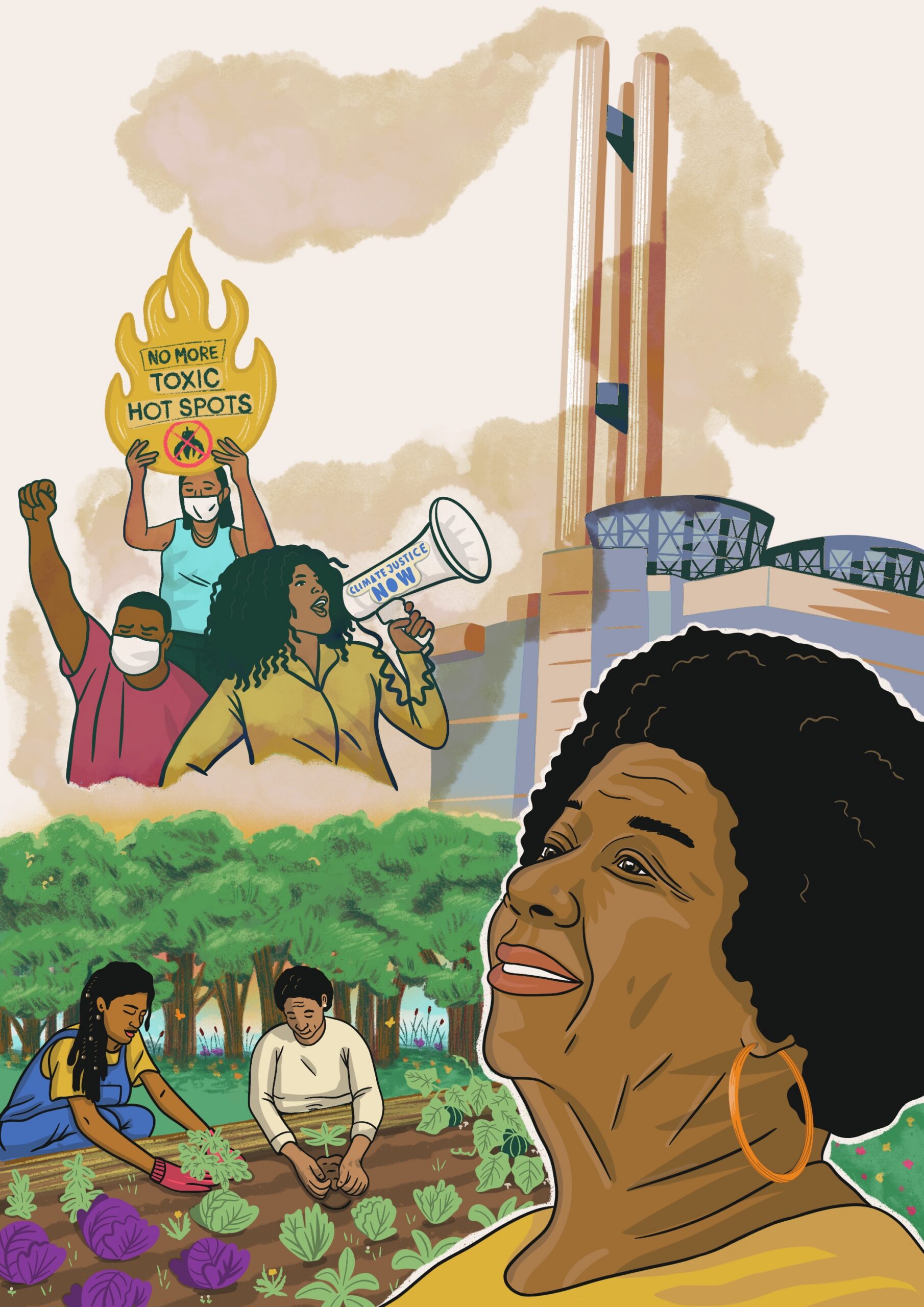
Art Credit: Lynda Grafito
AN EQUITABLE AND JUST NATIONAL CLIMATE AGENDA
To effectively build an inclusive, just, and clean-energy economy, the national climate agenda must achieve the following:
All communities have a right to live free from exposure to dangerous toxic pollution in their soil as well as in the air they breathe, the food they eat, and the water they drink. Yet persistent racial and economic inequalities—and the forces that cause them—embedded throughout our society have concentrated toxic polluters near and within communities of color, tribal communities, and low-income communities. These underlying social forces, including persistent and systematic racial discrimination and economic inequality, have created disproportionately high environmental and public health risks in these areas relative to wealthier white neighborhoods. The national climate policy agenda must address this environmental injustice head-on by prioritizing climate solutions and other policies that also reduce pollution in these legacy communities at the scale needed to significantly improve their public health and quality of life. The agenda must also build the U.S. Environmental Protection Agency to fulfill its mission to protect the nation’s health and the environment by developing and enforcing effective regulations for all communities.

Art Credit: Lynda Grafito The devastating and costly consequences of climate change threaten the health, safety, and livelihoods of people across the country. Generations of economic and social injustice have put communities on the frontlines of climate change effects. The national climate policy agenda must have as its foundation policies that reduce greenhouse gas emissions and locally harmful air pollution at the ambitious scale and speed needed to avoid the worst and most costly health impacts, especially for the most vulnerable communities and communities coping with the legacy pollution from the present economy. This includes reducing emissions in low-income areas and communities of color—EJ communities— through a suite of policies, including climate mitigation policy. The agenda must mobilize vast new resources to reduce carbon pollution, curb locally harmful pollution, and build resilience to improve the health, safety, and livability of all communities in a climate-changed world.
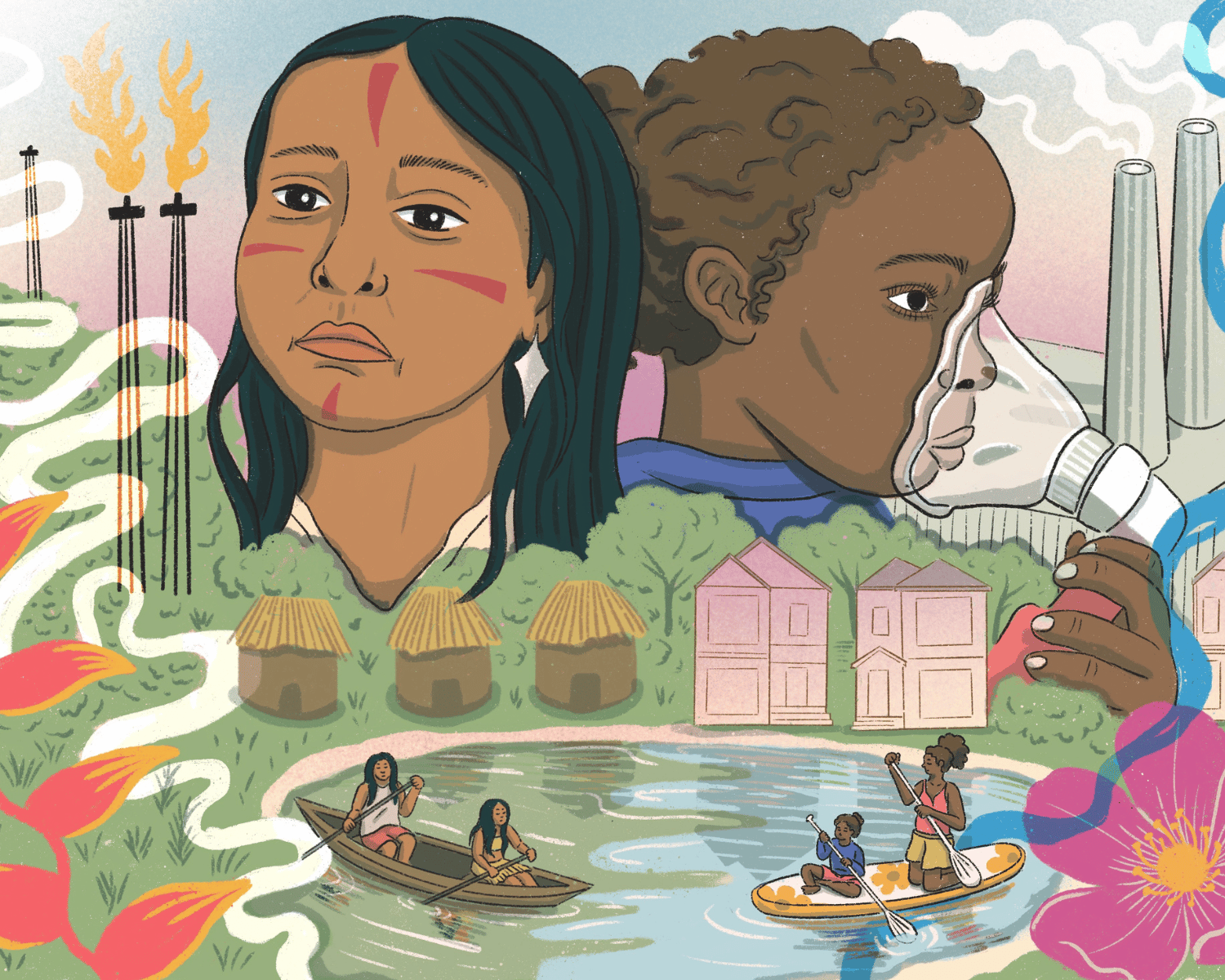
Art Credit: Lynda Grafito History shows that environmental regulation does not necessarily mean healthy environments for all communities. Many communities suffer from the cumulative effects of multiple pollution sources. A national climate policy agenda that addresses climate pollution must not abandon or diminish the important goal of reducing toxic pollution in all its forms. Climate solutions must be part of a comprehensive approach to reducing legacy environmental and economic impacts on communities and be designed intentionally to ensure that they do not impose further risks. Strategies to address climate change must not disproportionately benefit some communities while imposing costs on others. In fact, the national climate policy agenda should be used to reduce the disproportionate amount of pollution that is often found in EJ communities and that is associated with cumulative impacts, public health risks, and other persistent challenges.
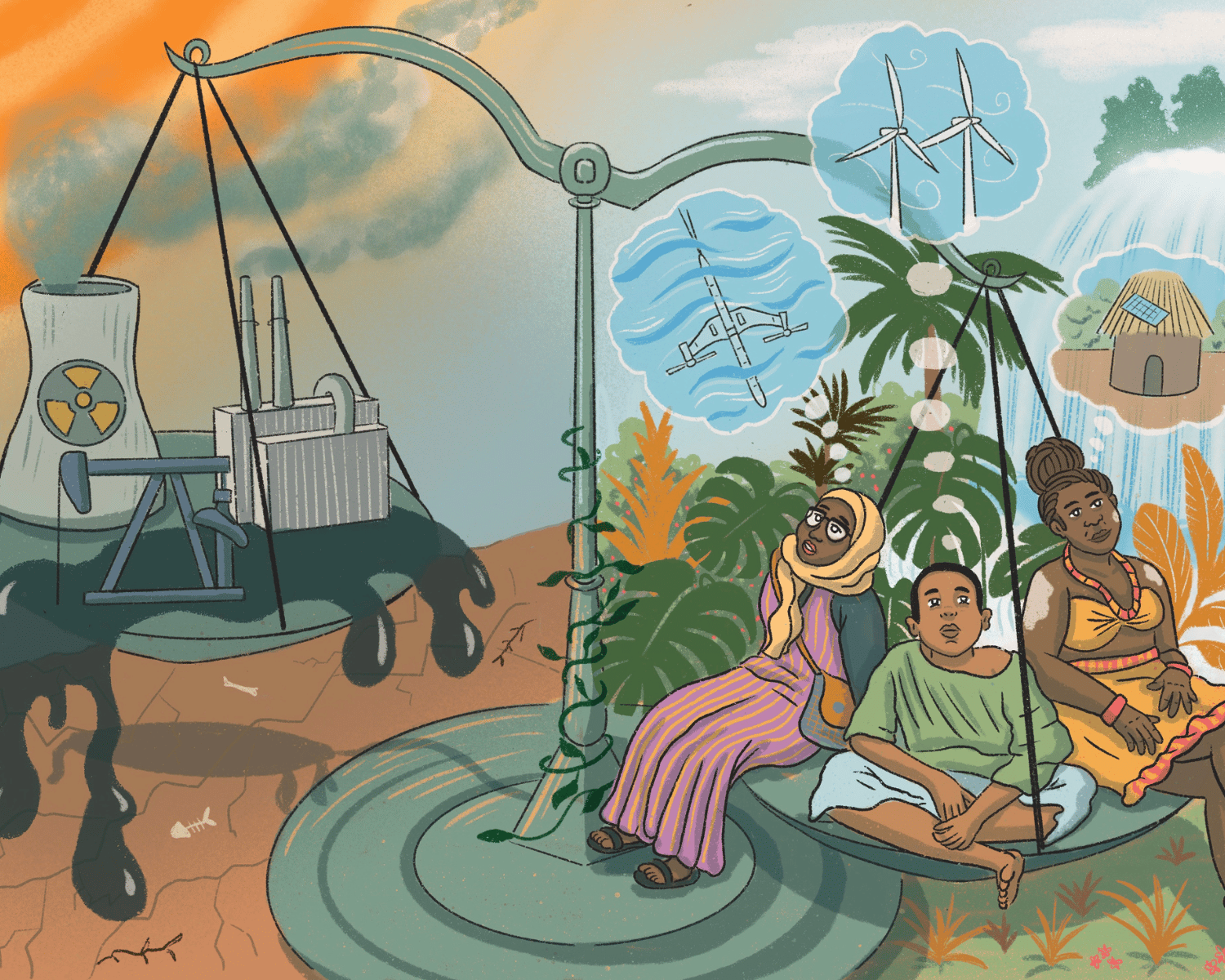
Art Credit: Lynda Grafito - The shift to a sustainable, just, and equitable energy future requires innovative forms of investment and governance that distribute the benefits of this transition equitably and justly. This includes investing in the development of innovative decentralized models of energy provision; community governance and ownership; incorporation of social and health benefits into energy systems planning; incentivizing the inclusion of equity into future energy investment through public programs; and supporting public and private research and development to include equity considerations in new technology development.
The national climate policy agenda must drive a rapid shift toward a pollution-free, inclusive, and just economy as well as create high-quality jobs with family-sustaining wages and safe and healthy working conditions. Breaking down the barriers that produce unemployment and underemployment must be a priority. Workers must be treated fairly and supported through investments in workforce and job training programs, especially in communities with disproportionately high underemployed and unemployed populations and in communities that have been historically reliant on fossil fuel extraction and energy production.
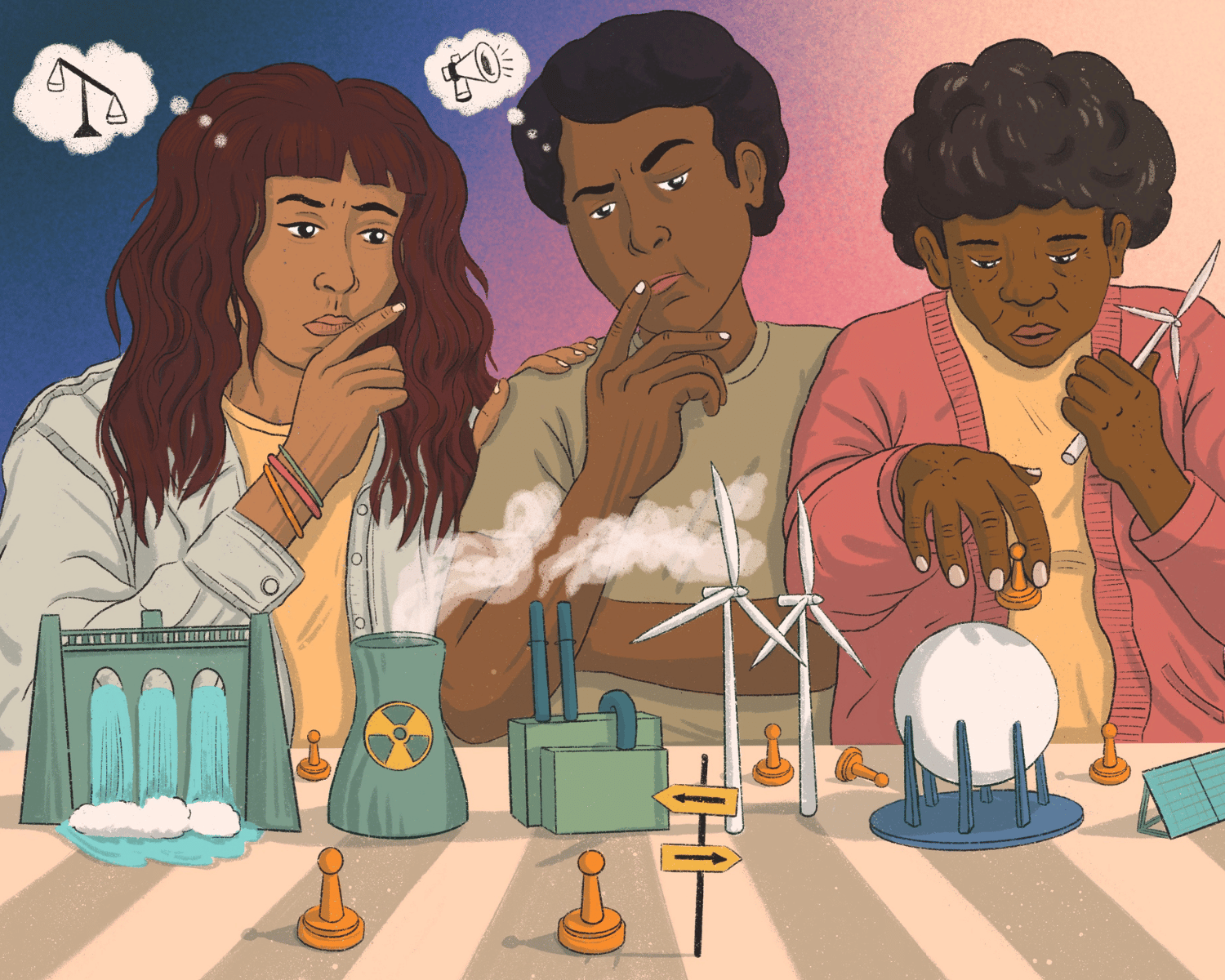
Art Credit: Lynda Grafito The national climate policy agenda must significantly reduce domestic energy vulnerability and poverty by addressing the problem of high energy cost burdens. To live and prosper in today’s society, access to affordable, reliable, and sustainable energy is a basic need in daily life and fundamental to achieving rights related to health, environmental quality, education, and food and income security. Given the disparities in the housing stock and infrastructure across communities, it is imperative that future energy systems provide affordable energy access that ensures a healthy standard of living that provides for the basic needs of children and families. The nation needs bold new leadership that will ensure access to sustainable energy, including by supporting investments in cooperative and nonprofit energy organizations; community and stakeholder engagement and participation in energy planning; public-private partnerships; and renewable and energy efficiency demonstration projects in our most vulnerable communities.
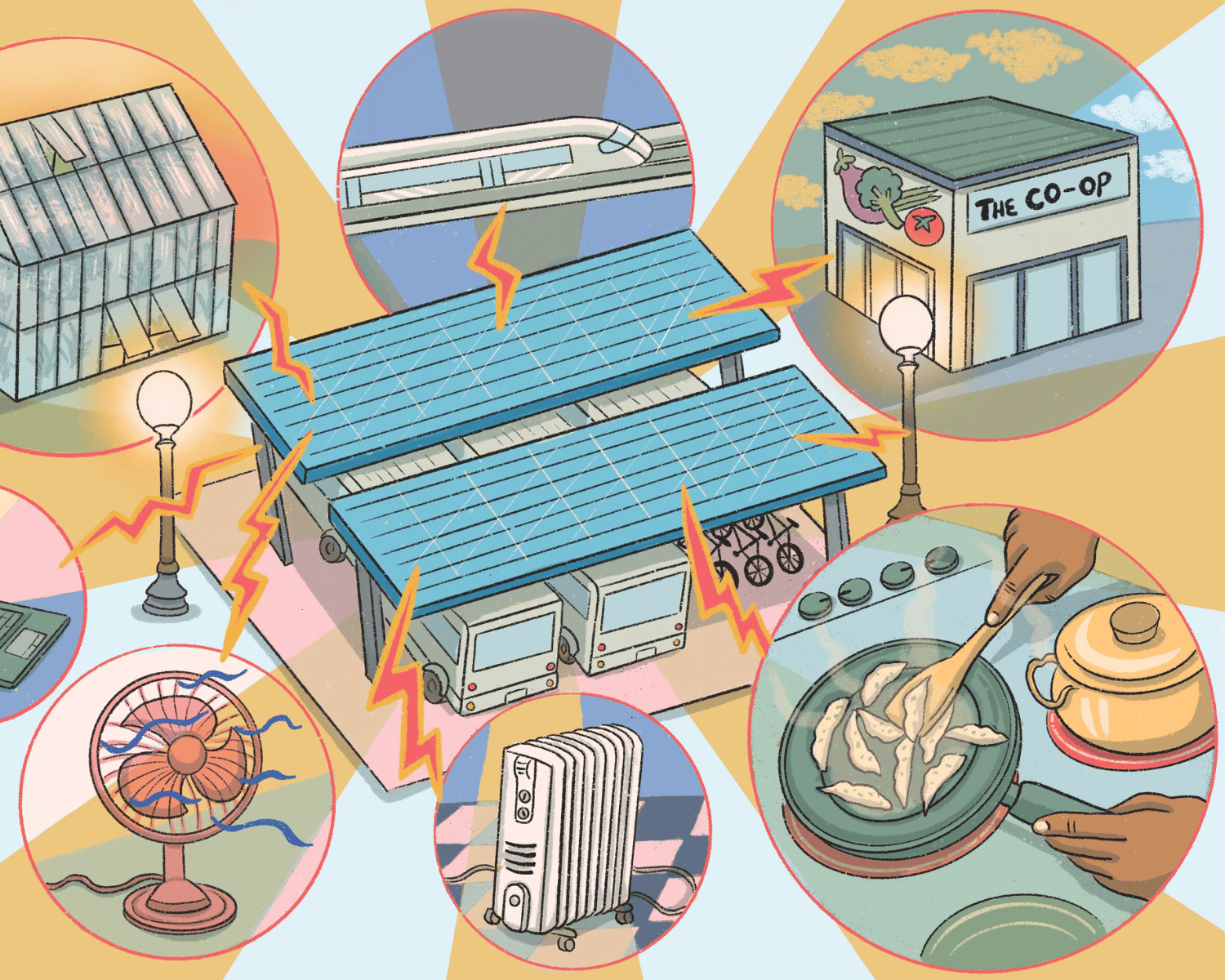
Art Credit: Lynda Grafito - As a major contributor to climate and air pollution, we must build the next century’s transportation system to ensure healthy air quality for all communities. This will require massive investment in affordable, reliable, and environmentally sustainable transportation. As with other sectors, the transportation system has a direct effect on economic and social opportunities. Public resources and planning decisions affect patterns of urban development and the structure of local economies, including where jobs and employment are located. The transportation sector is also responsible for providing accessibility to basic human needs. Therefore, transportation planning must ensure affordable transportation that provides for community members’ mobility and access to daily activities and services, including jobs, education, health care, affordable housing, and social networks.
Clean and affordable energy and transportation through an increased and appropriate level of new federal investment in zero-emissions transportation options for all community members in both rural and urban areas must be a priority. This includes programs to scale up investment in public transit; zero-emissions transit buses, diesel trucks, and school buses; and accessible and affordable adoption of electric cars. We also need smart planning that will make our communities safe for pedestrian and bicycle travel.
The goods movement system that distributes raw materials and consumer products currently relies on diesel engines that produce emissions that have significant health and environmental effects on workers and members of surrounding communities. A national climate policy agenda must reduce pollution by advancing a zero-emissions goods movement transportation system to protect the health of workers as well as fenceline and frontline communities and ensure that they benefit from new clean transportation technology development.
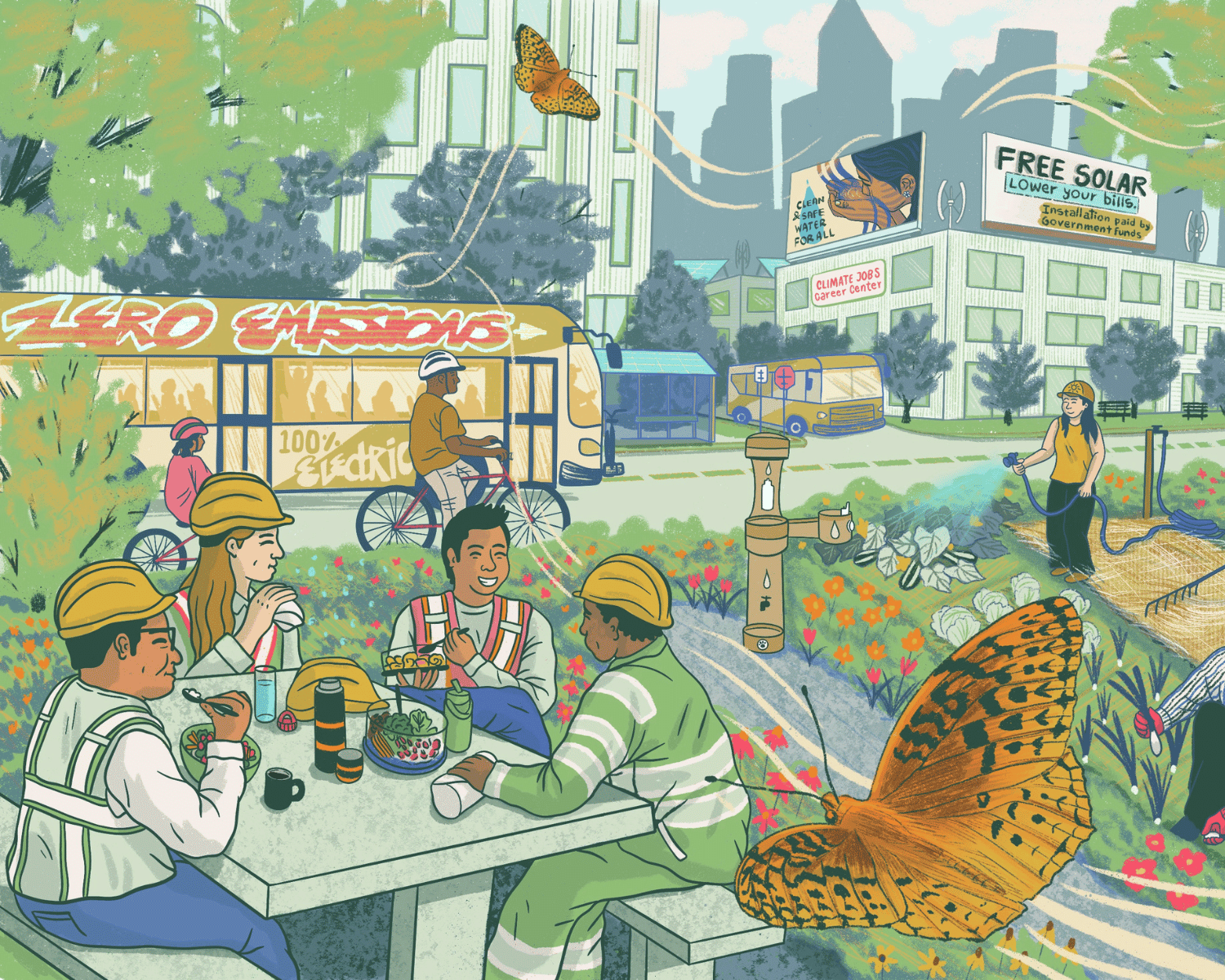
Art Credit: Lynda Grafito Climate change exacerbates existing vulnerabilities and creates new risks in our communities. As a result, climate change presents historic challenges to human health and our quality of life. Communities across the country need a national climate policy agenda that will mobilize the massive investments necessary to prepare for climate change impacts. Climate solutions provide opportunities for localized benefits that enhance the quality of life for all communities, including by improving local air quality, access to healthy food, local economic development, public health, and community vitality.
We need to build housing and infrastructure that can withstand more powerful storms, floods, heat waves, cold snaps, and wildfires; reduce carbon and air pollution in areas with high cumulative pollution; build a more sustainable food and agricultural system; and expand access to family-sustaining jobs and other economic opportunities. As climate change deteriorates air quality, increases vector-borne disease and allergens, and contributes to a host of other public health threats, we must ensure full access to health care for all. The national climate policy agenda must prioritize investments in communities that are the most vulnerable to climate change, including in health monitoring and research to provide rigorous and reliable research on our progress.

Art Credit: Lynda Grafito A national climate policy agenda must acknowledge the continuing increase in wealth and income inequality that plagues our communities. This growing wealth gap makes inclusive local economic development a priority for communities and governments. Economic diversification is critical to effectively address climate change and reduce economic and social vulnerability. We must create and support strategies that shift away from high pollution products and production processes toward those that are low-emission and sustainable. This also includes investments in innovative and worker-supported economic organizations such as cooperatives and other community wealth-building strategies.
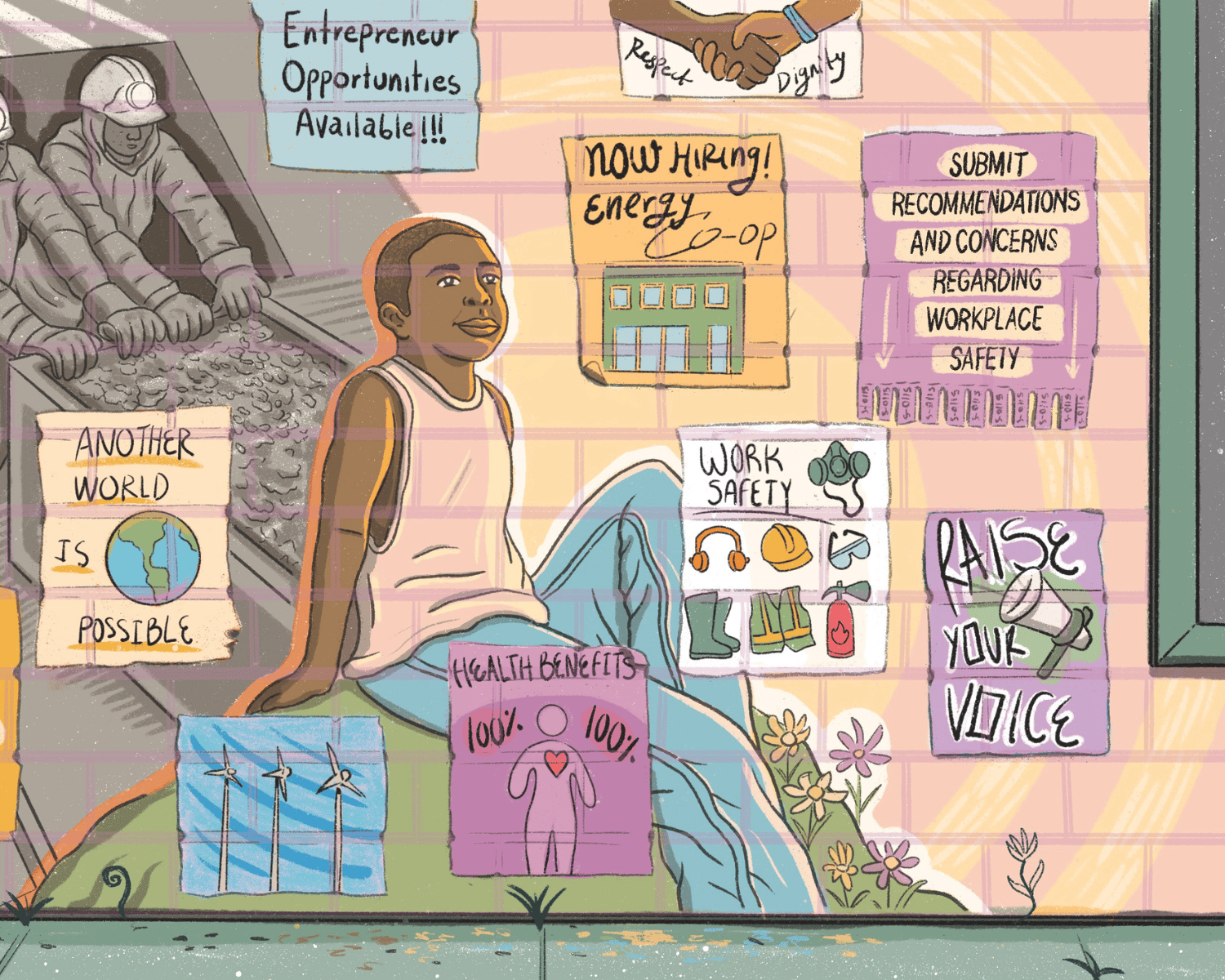
Art Credit: Lynda Grafito - A national climate policy agenda must ensure that sustainable investments for both mitigation and adaptation do not impose costs—both social and otherwise— on overburdened and vulnerable communities. Therefore, it is essential that we as a nation invest resources to eliminate barriers to and provide affordable and safe housing for all community members. It is imperative that new investments in resilient infrastructure in communities that have been historically disinvested be a national priority.
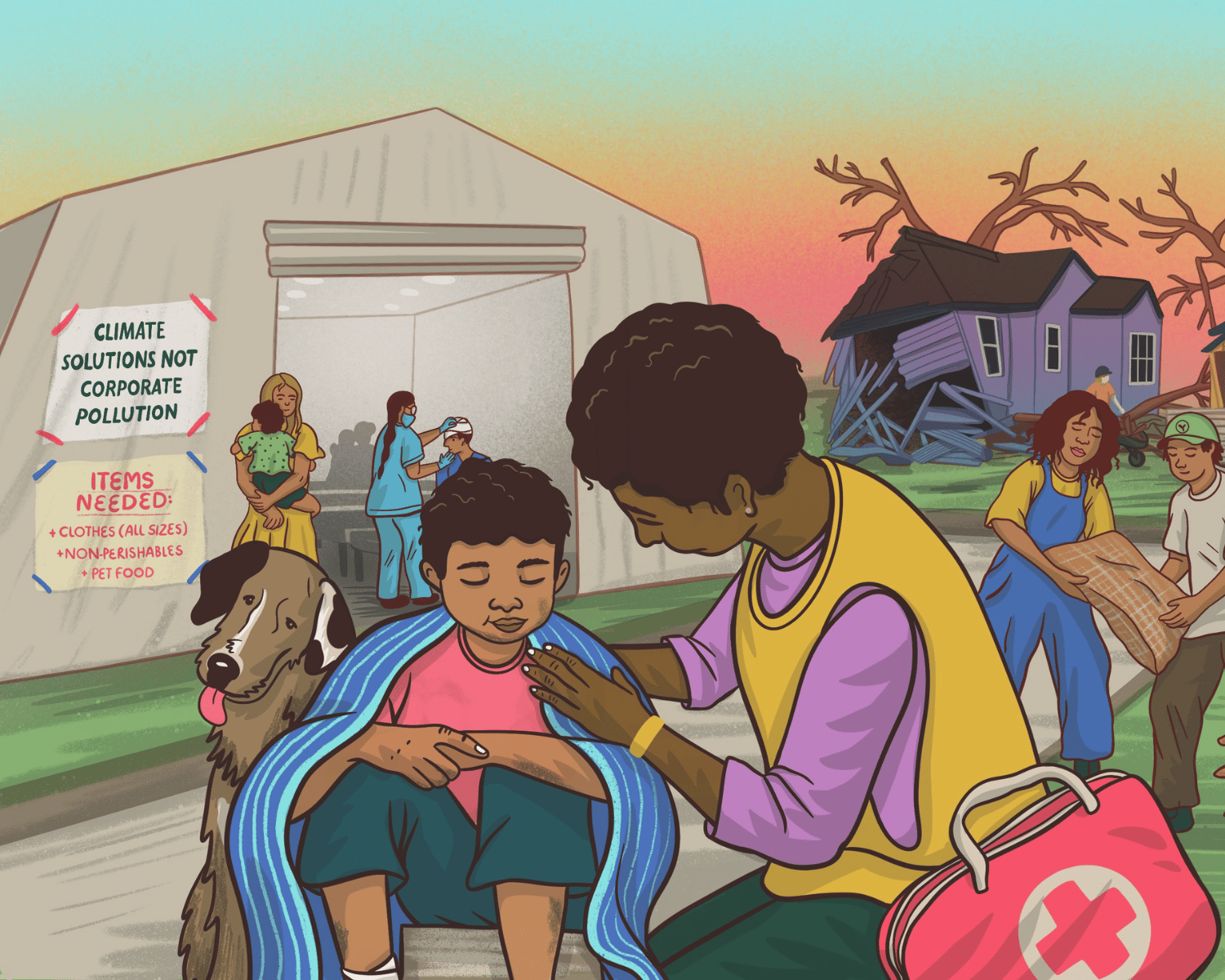
Climate-related events are already having severe and often devastating effects on communities, including requiring people to evacuate and relocate out of harm’s way. These types of events are expected to become even more intense and damaging in the future. Leaders at all levels of government must recognize their duty and responsibility to support displaced families to return to their communities or to relocate to places of their choosing.2 This includes prioritizing public and private investments to rebuild affordable and accessible housing and transportation for residents who have been displaced due to climate and other disaster events—including those with the least resources and ability to respond—and to ensure that displaced people can participate in the planning and management of their return or relocation.
To effectively address the steady rise in climate-related and other disasters, the national climate policy agenda must support equitable and responsive relocation planning and investment in the wake of such events as well as proactively help to protect communities from climate change effects and displacement. In places exposed to extreme climate risks, planned relocation must provide for the improvement of community members’ living standards. Social cohesion is a foundation for community well-being, and, therefore, relocation must strive to maintain and support family unity as well as community and kinship ties. The economic and social disruption to communities that require relocation have significant health, economic, and emotional impacts. It is imperative that relocated community members have access to a full range of health and economic services and the right to choose their residence.
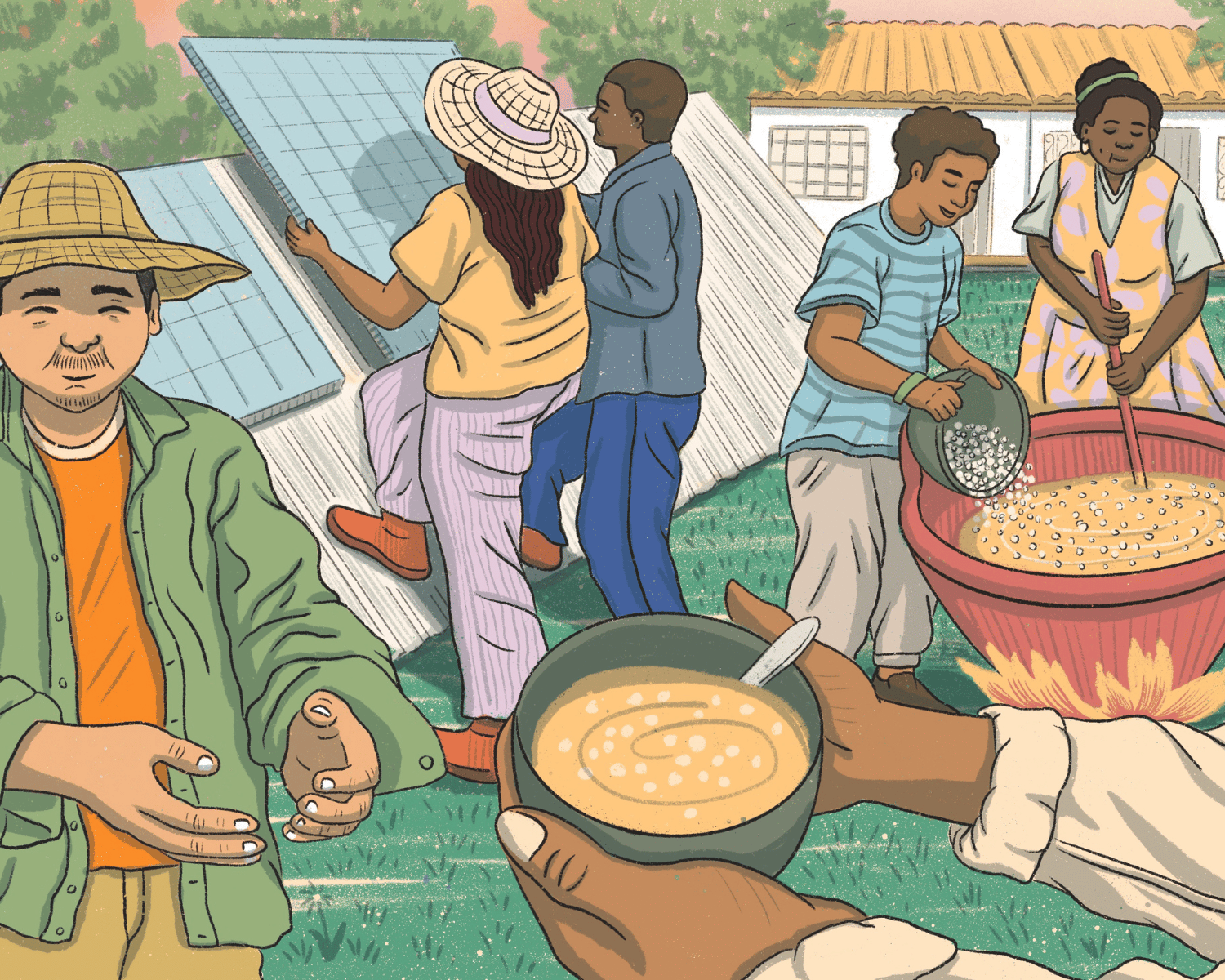
Art Credit: Lynda Grafito A national climate policy agenda must be predicated on the principle that land is fundamental to the exercise of community self-determination. Land is integrally tied to community and cultural identity, and its use is directly related to community members’ ability to meet their social, economic, and cultural needs. Urban and rural development and redevelopment must not lead to greater socioeconomic gaps or escalating costs that displace community members. These projects must result in lower pollution emissions for the surrounding community. It is imperative that programs and initiatives to protect and redevelop the environment promote community wealth building and economic diversity that directly benefit local community residents.
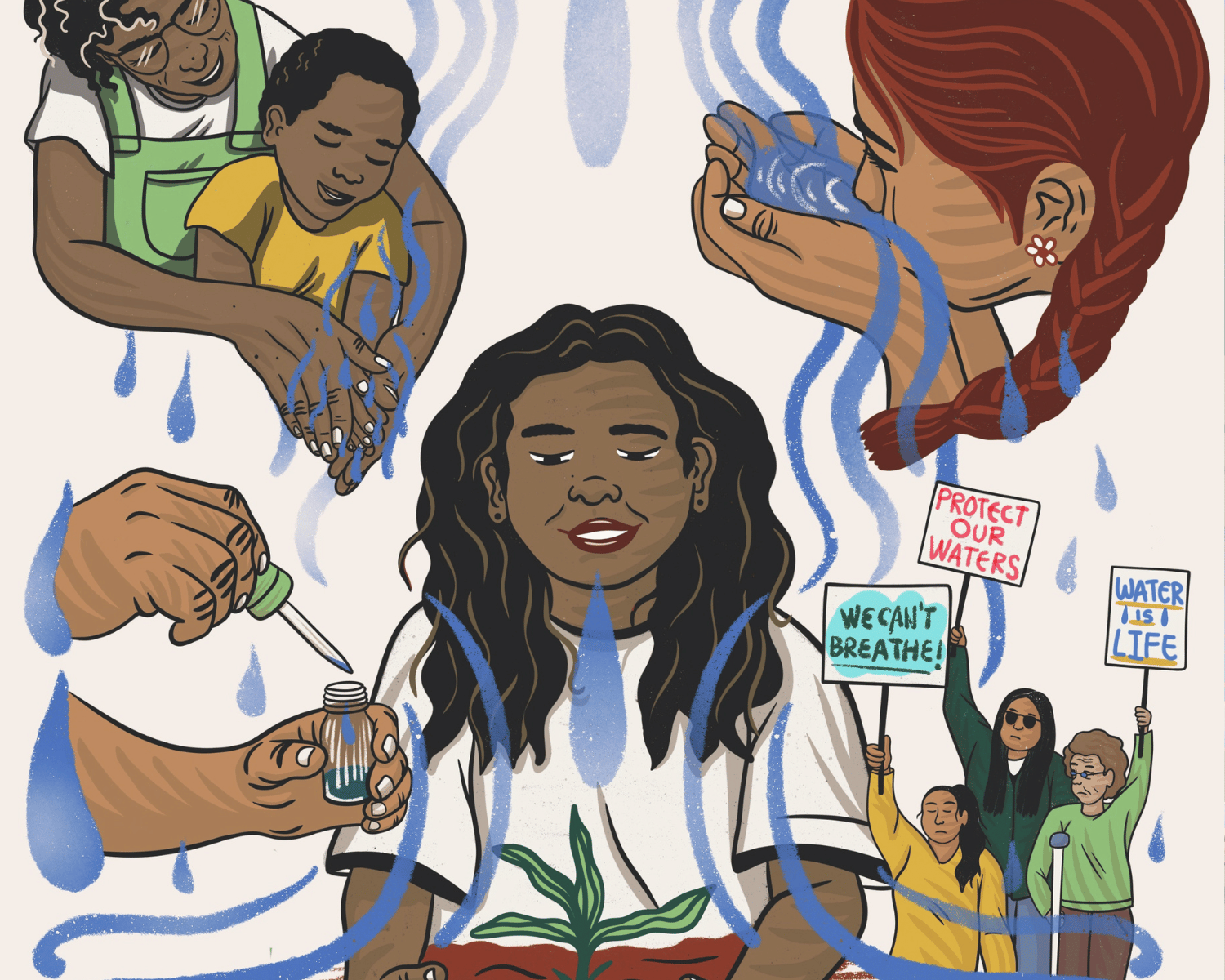
Art Credit: Lynda Grafito Climate change affects the water cycle, which in turn affects the nation’s water quality and supply. The nation’s drinking water infrastructure is already in dire need of massive investment. The national climate policy agenda requires solutions that take into account the effects of climate change on this stressed water infrastructure. As we develop climate solutions, we must focus on avoiding those which impair or burden aquifers, lakes, rivers, and oceans.
A comprehensive infrastructure plan that will focus on water and other basic necessities—specifically for communities that have already experienced significant health and economic impacts— is of the highest priority. Investments must prioritize communities that are already affected by inadequate, harmful, and health-impairing water infrastructure. Bold new leadership is needed to ensure that all community members have access to safe, clean, and affordable drinking water as well as to maintain and protect water as a common resource. Access to clean water is a basic human right that we must protect for all children and families. As we develop climate solutions, we must avoid those that harm or burden oceans, lakes, rivers, and waterways.
Art Credit: Lynda Grafito A national climate policy agenda must include funding for climate research on equity and climate issues. This research must effectively address equity and justice in climate planning and policy and be at a scale and level of rigor that has been historically invested in previous carbon-mitigation policies and programs. Public and private supporters of these past efforts have a moral obligation to also invest in the needs of communities that have been made vulnerable by past environmental, energy, and economic policies. If we do not sufficiently fund and perform EJ and equity research as it relates to climate change, then climate change policy and research has a significant potential to perpetuate and even exacerbate inequalities rooted in race and income.

Art Credit: Lynda Grafito We must aim to limit global warming to no more than 1.5 degrees Celsius over preindustrial levels by 2050. The national climate policy agenda must ensure that the United States acts effectively, responsibly, equitably, and justly to achieve this goal. This requires advancing global climate justice, including by committing to even more ambitious emission reduction goals in the future to contribute our fair share in the global effort to stabilize the climate system, and committing financial resources for least-developed nations to cope with the impacts of climate change. We must do this by radically scaling up both U.S. domestic actions and international cooperation in ways that end poverty and inequality; build sustainable communities and cities; improve public health and well-being; and reach universal achievement of the U.N. Sustainable Development Goals by 2030.3

Art Credit: Lynda Grafito
Platform Signatories
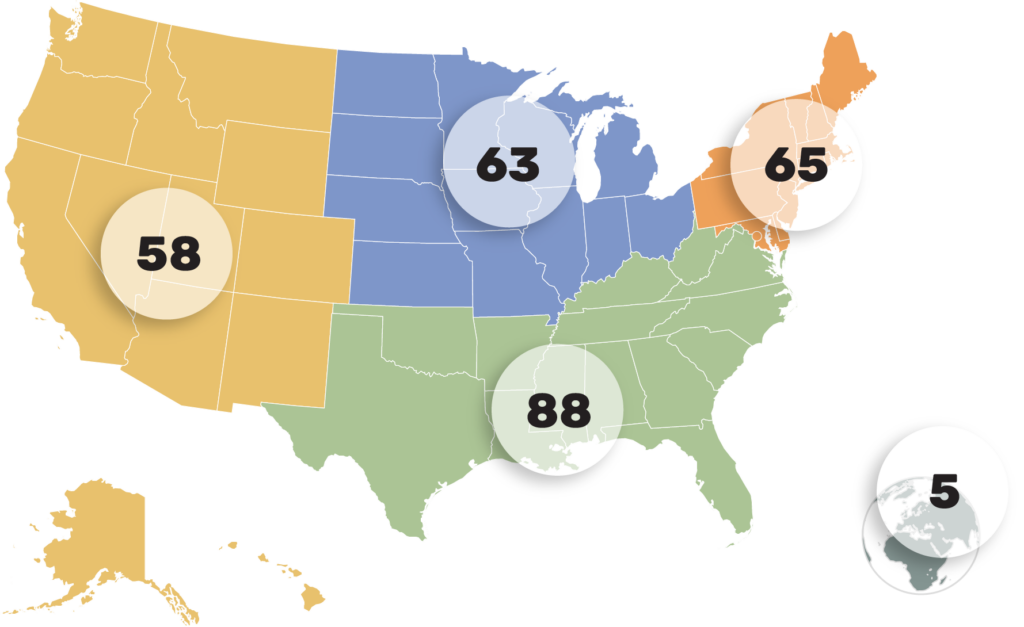
The Platform for a Just Climate has been signed on to by over 300 organizations, including 59 climate justice and 93 environmental justice organizations across the country.
We invite all who align with our vision to join us in fighting for the bold and just climate future that our communities deserve by signing on to the platform.
346 Consignatories
48 States
5 Countries