Hurricane season is officially underway, and several scientific agencies are forecasting an active storm season in the months ahead. At the same time, temperatures above 100 degrees are expected across west and southwest Texas, much of the Southwest, and California’s interior valleys, and this year’s recordbreaking wildfire season has already blanketed much of the country in smoke and displaced tens of thousands of people across multiple states in the North.
We know that the heaviest burden of extreme weather does not fall equally. Low-income communities and communities of color are often hit first and hardest. These communities have historically had the fewest resources to prepare for and recover from disasters, while also having the most at stake.
This season of heat, hurricanes and wildfires, we are highlighting how investing in people and in local climate infrastructure in the most underserved communities builds long-term resilience to extreme weather events for all. When we hold polluters accountable and direct resources where they are needed most, we can better protect lives, strengthen neighborhoods, and prepare communities to withstand the growing threats of extreme weather.
Environmental justice communities hold the solutions that will transition us from climate chaos to safe, healthy, and just climate futures. Environmental justice groups have been building community hubs where residents can take shelter, expanding the tree canopy in urban neighborhoods, educating communities on how to prepare for extreme weather and so much more. However, a number of these initiatives have been supported by federal programs that are under attack by the Trump Administration.
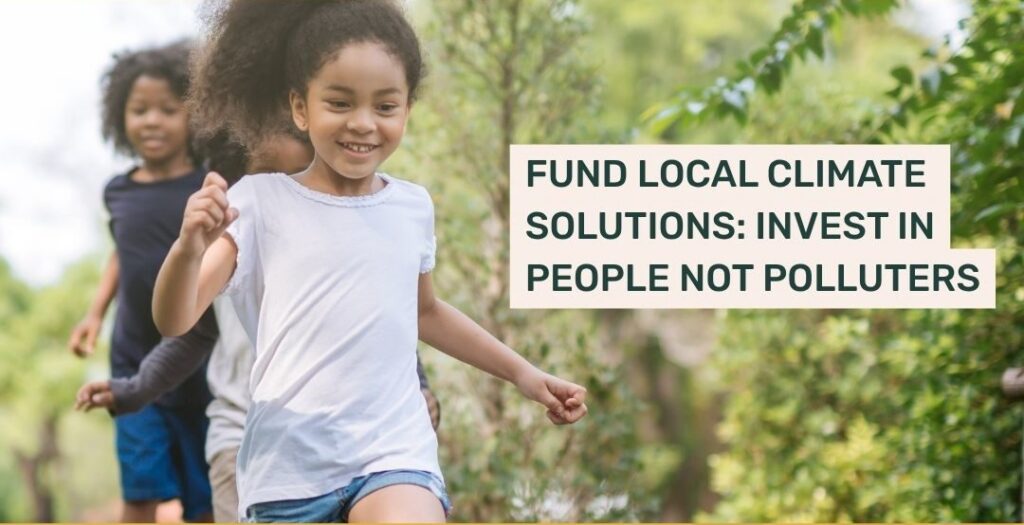
Fund Local Climate Solutions: Invest in People Not Polluters
As Members of Congress face their constituents during this year’s August Recess, we need to set the tone for the lame duck session of Congress through authentic grassroots organizing. Members should return from recess with clear takeaways on the issues that matter most to their voters. Successful organizing and engagement can help ensure members know that being strong on climate, energy, and environmental justice is a top priority for their communities.
The 2026 August Recess Advocacy Toolkit supports grassroots groups in engaging their Members of Congress during the August recess to:
- Highlight how loss of funding for Environmental Justice programs worsens climate impacts for our communities.
- Showcase community-led, justice-centered climate solutions that improve a community’s ability to withstand extreme weather events and require sustained federal investment and policy support; and
- Ask Members of Congress to protect and expand funding for local climate solutions, equitable climate resilience, clean energy access, health, and community infrastructure.
What you can do:
- Use the How to Reach your MOC guide to set up an in-person meeting with your representative;
- Use the Policy Priorities & Messaging Guide to highlight local climate solutions you are working on and persuade your elected representatives to commit to protecting funding for federal programs that invest in local climate solutions and protect us from climate-driven extreme weather.
- Use social media to amplify and highlight the transformational power of investing in people and in local climate infrastructure in the most underserved communities. Tag us in your social media posts @ajustclimate so that we can reshare and amplify your advocacy.
- Write Op-ed and LTEs on local climate solutions that you are working on that build long-term resiliency to extreme weather events.
- Let us know at cespedidio@ceed.org if you have hosted or participated in an event engaging your member of Congress during the August recess.
- Reach out to us at cespedidio@ceed.org if you are not hosting an event but would like to participate and engage in climate events hosted in your district by other groups.